Lipstick for goats

Lipstick for goats

Wednesday, 2 December 2015

Wildflowers, not so wild flowers and weeds.

I have had a ragging fever.  It causes you to bend over from the waist, clasp hands behind your back and peer at the ground, every now and then an exclamation of glee comes forth from your vocal cords.  I caught this fever while playing with the kids in the paddock.  I believe it may be called ‘wildflower fever’.

With kidding finally settling down I have been able to enjoy the antics of the babies.  Sitting down in the paddock I can be assured of being assailed by a tangle of legs, floppy ears and warm bodies jumping all over me, pushing me into the grass.
  
But wait, what is that?  A tiny blue flower on a long delicate stalk, gently swaying in the breeze.There is another one over there nestled in the grass but it is mauve.  Beyond that is a yellow flower. On close inspection I was amazed at the variety of grassland flowers just in our home paddock.

Tuffted Bluebell (Wahlenbergia communis)
This was the first grassland flower I discovered with my nose pushed into the grass thanks to Chunky Monkey.


I am ashamed to say for the past 10 years in spring I have just been too busy or more likely walked around our property with my eyes tightly closed!   I have never noticed the array of spectacular wildflowers popping up.  Normally I would walk over the top of these delicate flowers with big heavy steel capped boots, crushing them out of existence; not even realising I had snuffed out their life.

I decided I would peel back my eyelids and venture into the bush and heath parts of our property armed with a camera to see what else I could find and to hell with the snakes.  This season I have already seen two Red Belly Black snakes.  I felt a little timid about coming across any snakes but wildflower fever had me firmly in its grasp, so snakes I’m coming in!!  I could not let this opportunity pass me by; the flowers here today may be gone by tomorrow. I had become obsessed with finding and photographing as many as I could.  


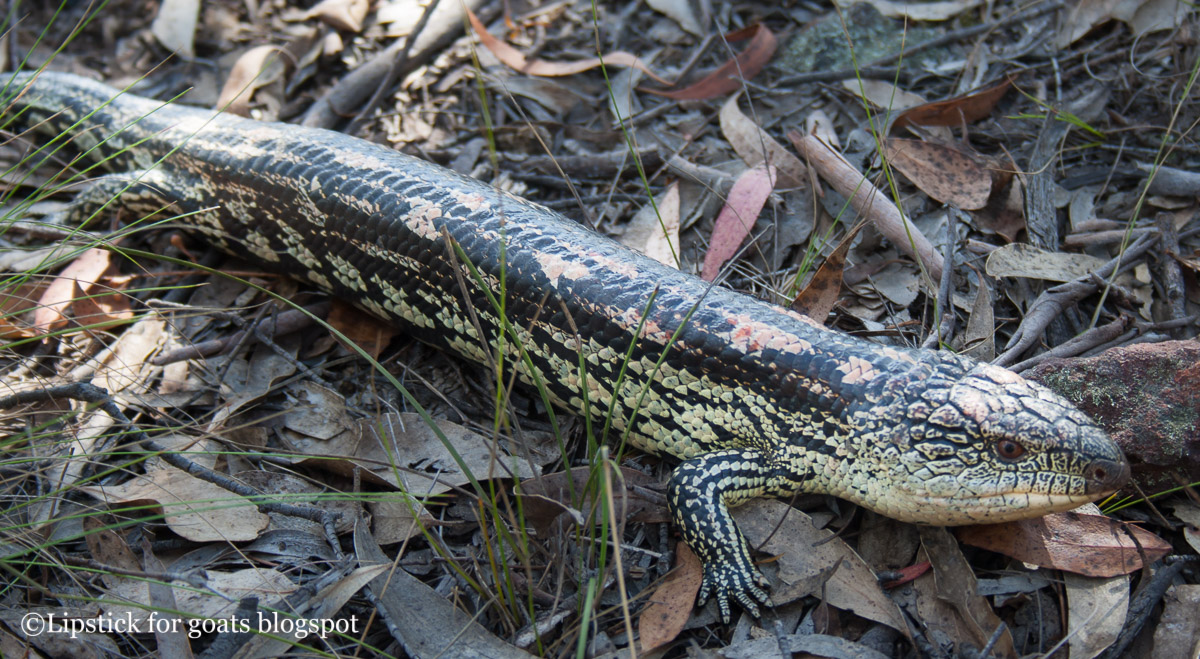
This guy gave me a scare when I came across him.  Thankfully a lizard, not a snake.  He was quite happy just to keep a beady eye on me while I inched closer to take a couple of photos of him.
Some of the flowers I found are so tiny, smaller than my little fingernail, they are extremely difficult to photograph as my standard camera lens doesn’t handle macro photos all that well. I resorted to my Iphone. I am not very good at allowing flies to crawl up my nose and into my eyes while holding the phone camera absolutely still for a critical close up focus.  When there were no flies there was a good breeze testing my patience.  No matter how teeny these flowers are a breeze makes them dance and sway making them impossible to focus on. Getting up at the crack of dawn before the wind comes is a waste of time; these wildflowers are lazy little flora, staying abed and not showing their gorgeous faces until at least mid-morning. 


Chunky Monkey wanted in on the action. "Nah not as good as a photo of me!  It doesn’t have cute floppy ears, why would you want to photograph that instead of me?"

While compiling this post I was surprised to find I had found over 60(!!!!) different flowers, far too many to amaze you with at once so I have decided to share these beauties over two posts. Some are probably weeds but what is a weed but a flower by another name. They are all beautiful.

For my own education I have searched the internet to identify the flowers. Where possible I have given the flower’s common name; who cares what the 15 letter unpronounceable botanical name is, I sure don’t, but for the purists I have added it. Maybe I have some wrong, I am happy to be corrected. 


In no particular order as they say on reality elimination shows....

 Grey Guinea Flower.  (Hibbertia obtusifolia)  Yes it’s yellow, I didn’t name it!


The weird but beautiful Allocasuarina flower.  This was at face height in the bush area of our property.


Grass Triggerplant (Styidium graminifolium)


 Ivy Goodenia (Goodenia hederacea) is absolutely everywhere on the property.


A rare find originating in Bunderberg Queensland with an exotic name ‘bundyrumcan’ of the family aluminium.


 Red Beard Orchid (Calochilus paludosus) 
A small Australian native orchid that is apparently not a common species so I was lucky to find a number of the orchids in our heath land.


 Dwarf Wedge Pea (Gompholobium minus)
 These are widespread over our entire property.


 Fringe Myrtle (Calytrix tetragona)
This small shrub has delicate white flowers with blush pink buds and are beautiful on mass. A few weeks after taking this photo my husband decided, without telling me, to slash the area where these beautiful bushes were springing up in. I felt a little devastated. 


 Black -anthered Flax Lily (Dianella revoluta)


Creeping Hovea (Hovea linearis)


Golden Weather-grass (Hypoxis hygrometrica)


 I suspect my husband planted this stunning red ‘plastic cappis’ flower.


Broom Milkwort (Comesperma sphaerocarpum) 
I only found two of these flowers together, they are so delicate and small.


Dusky Caps (Stegostyla moschato)
So pretty and very small.


 Common Onion Orchid (Microtis unifolia) a rather plain little orchid.


 Blue Dampiera (Dampiera stricta)
Named after the explorer William Dampier who was the first Englishman to explore parts of 'New Holland' now Australia. He has also been described as Australia's first natural historian.


 Narrow Leaf Drumstick (Isopogon anethifolius)
I did a double take when I saw this bizarre flower in the heath area of our property.


 Wire Lily (Laxmania gracilis),
Smaller than my little finger nail and delicate on a long stem, the wire lily seemed to only flower every few days.


Spotted Sun Orchid (Thelymitra ixioides)
Such a stunning little orchid with the delicate purple, blue and pink colouring.


Heath Milkwort (Comesperma ericinum)


 Austral Sunray (Triptilodiscus pygmaeus).  
This is all through the grassland areas.


 Dwarf Boronia (Boronia nana hyssopifolia)
Of all the flowers I found I think this one is my favourite.  It looks delicate but I think it is probably a sturdy little flora.


Banksia 


 Violet Kunzea (Kunzea parvifolia)

How can a shrub with such a pretty flower be such a pain in the behind?  As far as I’m concerned it is a woody weed taking over our property and the violet flush doesn’t last long enough to endear itself to me. It colonises areas so thickly that nothing can grow under it.  I try to kill, crush and destroy it with the slasher; even then the darn stuff grows back thicker and healthier, thanking me for pruning it. 


 Common Woodruff (Asperula conferta)


 Pale Sundew (Drosera peltata)
The plants gain some of their nutrients from insects trapped on the sticky leaves.


Broom Spurge (Amperea xiphoclada)


Native iris (Patersonia sericea)


Native Geranium (Geranium solanderi)

Wednesday, 18 November 2015

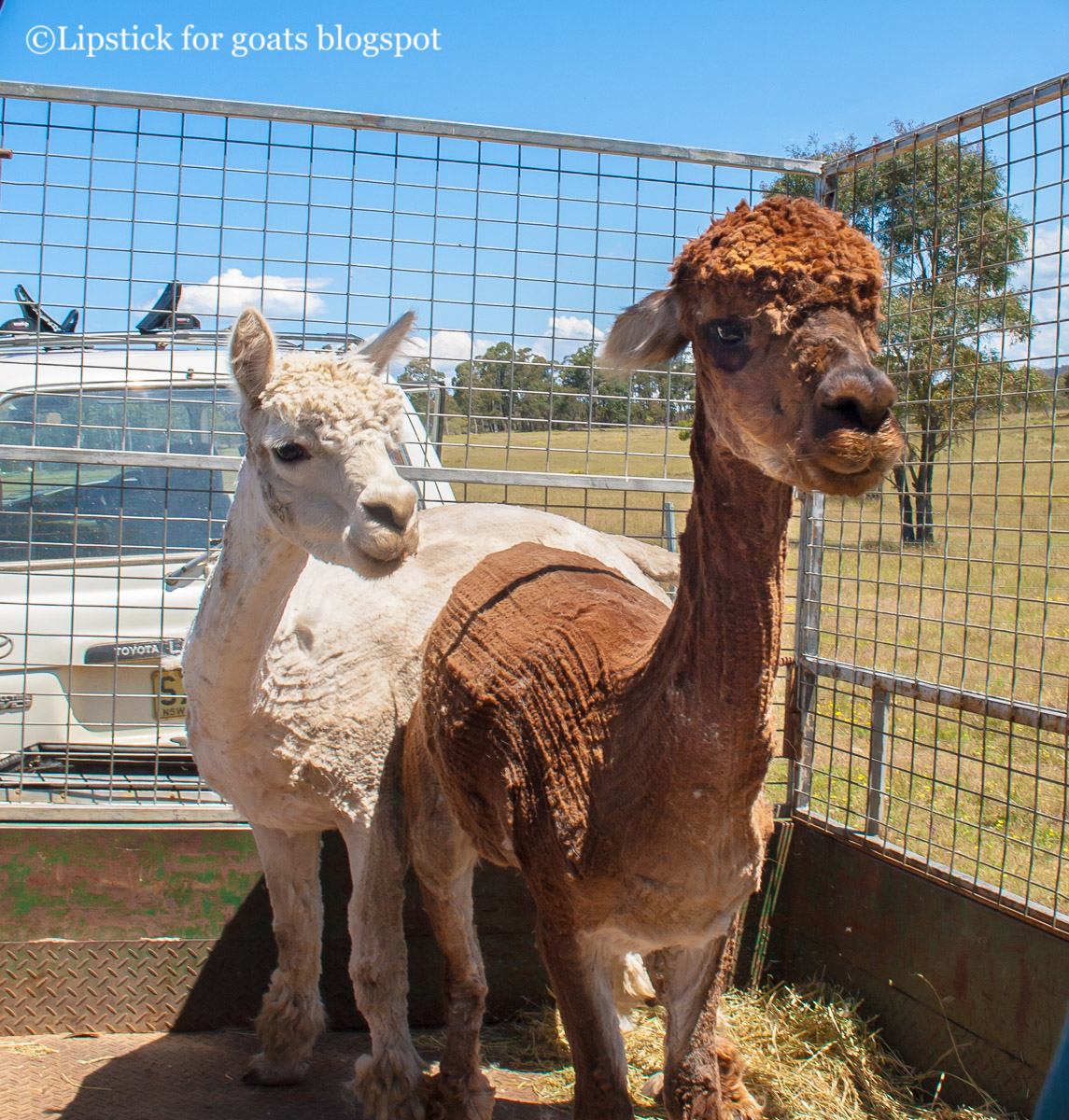
Naked weird looking dudes - yes my alpacas.

Toshi and True are finally nakie, skinny, weird, extraterrestrial looking dudes walking around the paddock. 

A few years ago I took up my friend’s offer of guidance during our first try at shearing our alpacas.  Hubby did better than I did; it was really hard feeling and seeing where I was going on their bodies under the fleece and I was scared of slicing them open.  


Truesdale is extremely unhappy with my styling efforts of 2013.  MacIntosh decided to go on strike, sitting down on the job, until he received better fringe benefits.


We averaged 40 minutes per alpaca.  It was a great experience to learn how to shear them but 40 minutes is a huge amount of time for the poor guys to be shackled on a table while I fluff around. I can only imagine a year on that time would blow out while trying to remember how to go about making them nude without the experienced supervision. 


For the cost of a shearer it is much easier to take them up the road to be shorn with our neighbours ‘pacas by Ian, a top gun shearer, and his son Michael.  I timed them this year – 5 to 8 minutes per alpaca including vaccinating, a refreshing drink of delicious drench for worms, a pedicure and the latest hair style!!  Far less stress for me, not to mention for True and Mac as well.

The shearers come complete with their own gear - table, generator, clippers and this year extra eye candy in the form of Quinton from the USA on a working visa helping them.
  

The table and shackles holding the alpaca look like some medieval torture rack but I can assure you it is not harming the animal in fact it is the gentlest and best way to stop the alpaca from hurting itself while being shorn, especially for alpacas not used to being handled. An alpaca looks to be a cuddly gentle animal but in fact can be very feisty, they also spit the foulest smelling cud when feeling confronted. 


Years ago my husband met a man who wrapped himself in rubber foam sheets secured together with packaging tape around his body. I sort of have the Michelin man in mind when I think of this. He then sheared his alpacas in a standing position; their heads tied to a post so they couldn’t cush (sit down).  They kicked out at him but the rubber absorbed the blows.    

To try to shear an alpaca in the same manner as a sheep would hurt the ‘paca’s back and be extremely difficult and uncomfortable on the shearer due to the animals size.

With the temperature about to skyrocket into the low to mid 30 degrees Celsius I bet my boys will be glad of the indignity of being hoisted on a table and being undressed. 


2015 the shearers are much better hairstylists than I am!

Sunday, 15 November 2015

Braidwood a historic little town

What better thing to do on a rainy day than be a tourist in town.  With the ‘Historic Braidwood Town Walk map’  firmly in my grasp  and the rain lightly falling I wandered the streets for a few hours and thoroughly enjoyed myself.


It’s not often I can take time out to ‘smell the roses’ and I have to say the roses are particularly beautiful at this time of year. The gardens look so much prettier in the rain; the leaden sky sheds a lovely diffused light making everything look softer, while the droplets of rain lying gently on the petals cleanse and refresh the blooms.


Braidwood was the first NSW rural town to be heritage listed in 2006, following a period of unpleasant dispute between those who wanted to preserve the town’s character and charm and those wishing to develop it.

The village was established in 1837 being named after Dr. Thomas Braidwood Wilson who had been granted land here in 1826.  Dr. Wilson was the surgeon superintendent on several convict ships to NSW from 1822.


When gold was discovered 1851 in nearby Araluen Valley and other surrounding areas the population of Braidwood swelled to over 10,000, this was when many of the substantial buildings were constructed.

Welcome to my town - Braidwood NSW.


 Wallace Street Braidwood - park end
Still on the main street


This house in Elrington Street dates to the 1840’s being the oldest dwelling in town. 


The old Maternity Hospital circa 1860’s was run by a sister of the notorious Clarke Brothers, the bushrangers who ran riot during the gold rush in this area. The building is now an antique store.  The owners have a bizarre sense of humour, note the mannequin holding the baby in the top dormer window!

All country towns have at least one pub.  Braidwood has two but at the height of the gold rush eleven hotels had been built to entertain the predominantly male population.


The Braidwood Hotel (formerly the Commercial Hotel) built 1859 is the oldest in Braidwood and still licensed.

The Royal  Hotel rebuilt in 1890 on the site of an earlier ‘Royal Hotel’.  The original name was changed to the Royal Mail Hotel in 1969 when scenes were filmed there for the movie “Ned Kelly’ starring Mick Jagger. I always thought Mick J was an odd choice to play our infamous bushranger.
The owners of the Royal Mail Hotel and some guests will tell you the pub is haunted. Room 14 in particular features lots of strange activity.  Well darn when I stayed there I wasn’t visited by any ghostly apparitions but then I wasn’t lodged in room 14, I always miss out on the fun, but if I had known about the pub being haunted I don’t think I would have slept very well, constantly checking there wasn’t a spook at the end of my bed.


Ryrie Park.  Dr. Wilson and prominent settlers provided exotic plants and flowers for the grounds. It’s a bit like a botanical garden with the trees labelled with their exotic unpronounceable names.  Markets are held in the park once a month. It is a lovely place to sit for awhile.


The Post Masters residence 1865


Workers cottages from 1860 have survived in nearly original condition and yes they are lived in. How cute are they! 


This is the old Wesleyan Church. It is now a private residence. I do wonder about its occupants.  There is a creepy baby mannequin suspended from the ceiling, sort of flying in front of the left window.

What town is complete without a few churches.  St Bedes Catholic Church and St Andrew’s Anglican Church are both built of local granite.
St Andrew's Anglican Church

St Bede's Catholic Church


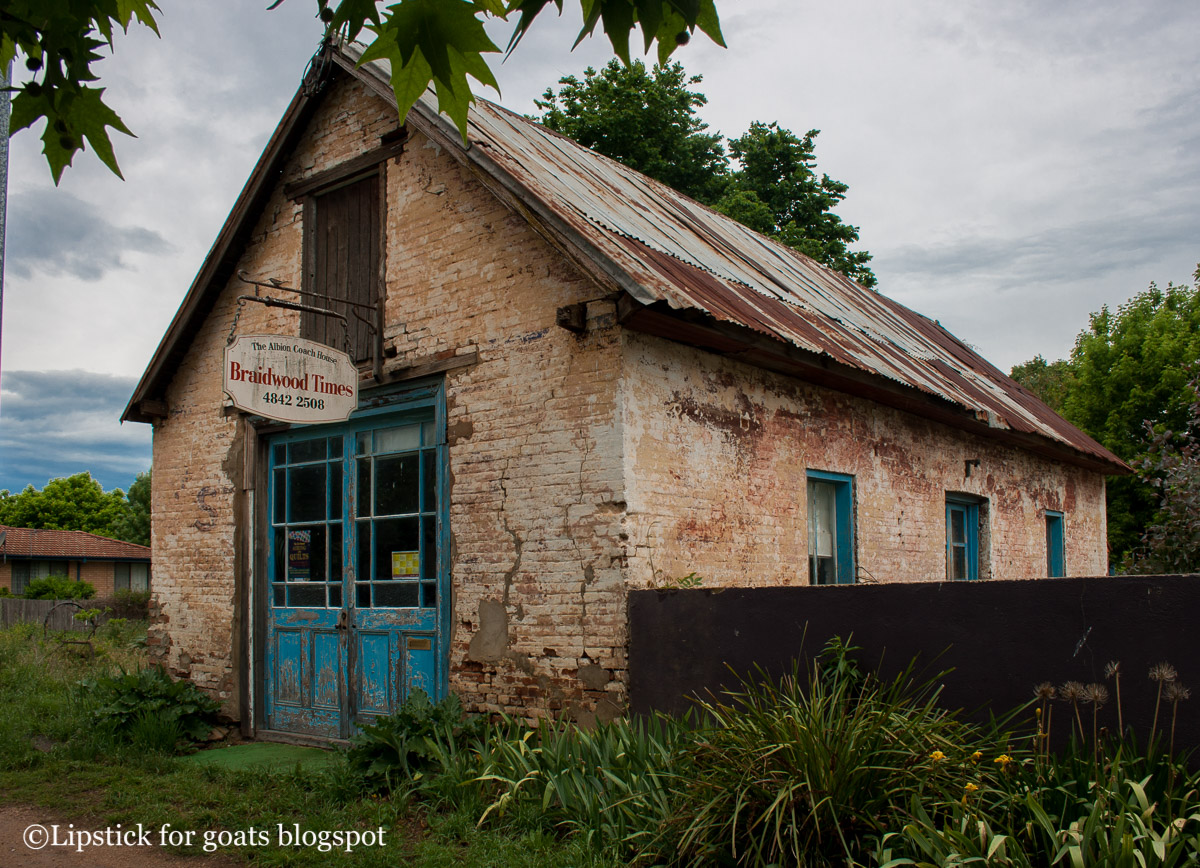
I love this cute quirky building. It houses the Braidwood Times newspaper.


The ‘Villa” circa 1850’s.


The Granite Store 1870


The Commercial Banking Company built in 1888 as a bank and managers residence certainly reflects the prosperity of the gold mining era.


The Albion Hotel 1872 was the most luxurious hotel in Braidwood and had a reputation for excellent food it is now a cafe on the lower level.

  Braidwood’s first bank The Joint Stock Bank built about 1855 . 


Tidmarsh was an Inn built circa 1856.  It appears today exactly as it did in 1862, complete with shingled roof.


Built as another hotel in 1845 of local granite this building now houses the Braidwood museum.


If you guessed another Hotel you are right!  The Criterion Hotel 1870.  A feature of this hotel was a long stool on the Wallace Street footpath on which patrons sat to watch the 
passing parade. 


This court house was built 1900 on the site of the earliest courthouse of 1837.


If you are ever passing through town do visit the Dojo Bread shop. The yummiest bread is made from this rustic little shop.


There are so many lovely cottages and just as many beautiful gardens.


I hope you enjoyed your tour of Braidwood as much as I did!